
How the Flooring Calculator Works
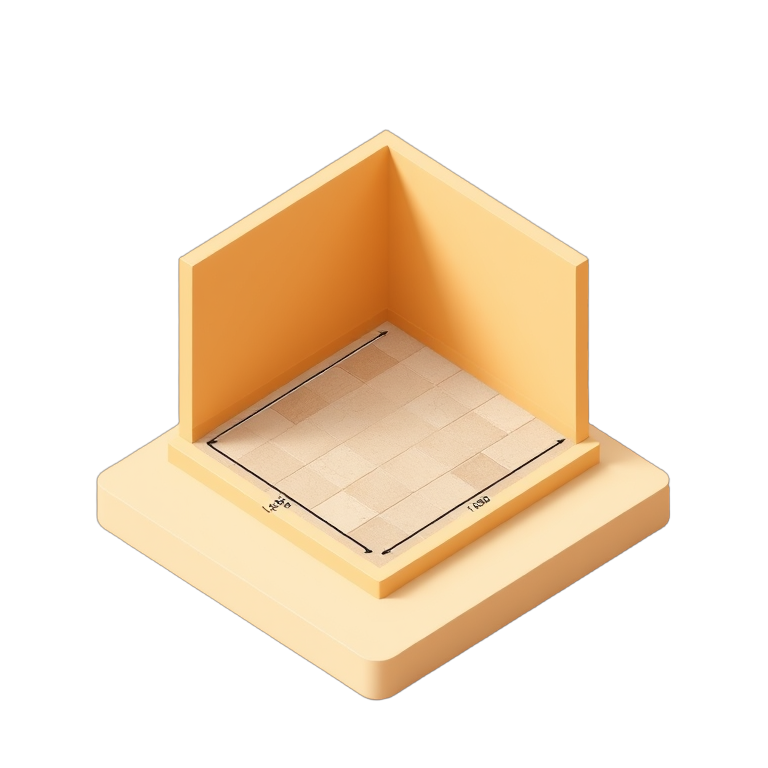
The flooring calculator starts with the rectangular room area: area = length x width. It then applies the waste factor to estimate buyable square footage. The material cost is the buyable square footage multiplied by your cost per square foot. The installation estimate uses a simple labor-rate allowance by flooring type, multiplied by the base room area.
For non-carpet choices, the page estimates boxes by assuming 20 square feet per box. That makes the result easy to compare, but the actual carton coverage printed by the manufacturer should control the final order. Carpet is shown as roll material rather than boxes.
Worked Example
A 12 ft by 10 ft room is 120 square feet. With 10 percent waste, the shopping quantity is 132 square feet. At $3.50 per square foot, material cost is $462. Laminate installation is estimated at $3 per room square foot, or $360, for a total project estimate of $822 before removal, trim, transitions, leveling, delivery, tax, and disposal.
Waste and Layout Choices
Waste is not only broken material. It also covers cuts at walls, closets, vents, pattern matching, color selection, and future repair stock. A simple rectangular room may work with a smaller allowance, while diagonal layouts, herringbone, complex rooms, and natural material variation can require more.
Project Notes
| Input or output | How to use it | Common adjustment |
|---|---|---|
| Room area | Measure the finished floor footprint. | Break L-shaped rooms into rectangles and add them. |
| Waste factor | Covers cuts, damaged pieces, and selection. | Increase for diagonal, patterned, or complex layouts. |
| Cost per sq ft | Use the actual product price. | Add underlayment, adhesive, transitions, trim, and delivery separately. |
| Installation | A simple labor allowance by floor type. | Subfloor repair, stairs, removal, and leveling can dominate labor cost. |
Before You Start
- Check substrate and moisture: many products require flatness and moisture limits before installation.
- Plan transitions: doorways, stairs, thresholds, and adjacent floor heights can add parts and labor.
- Use lead-safe practices: disturbing painted trim or old flooring in pre-1978 homes may trigger EPA lead-safe renovation rules.
- Know flood risk: below-grade or flood-prone spaces may need different flooring choices and local guidance.